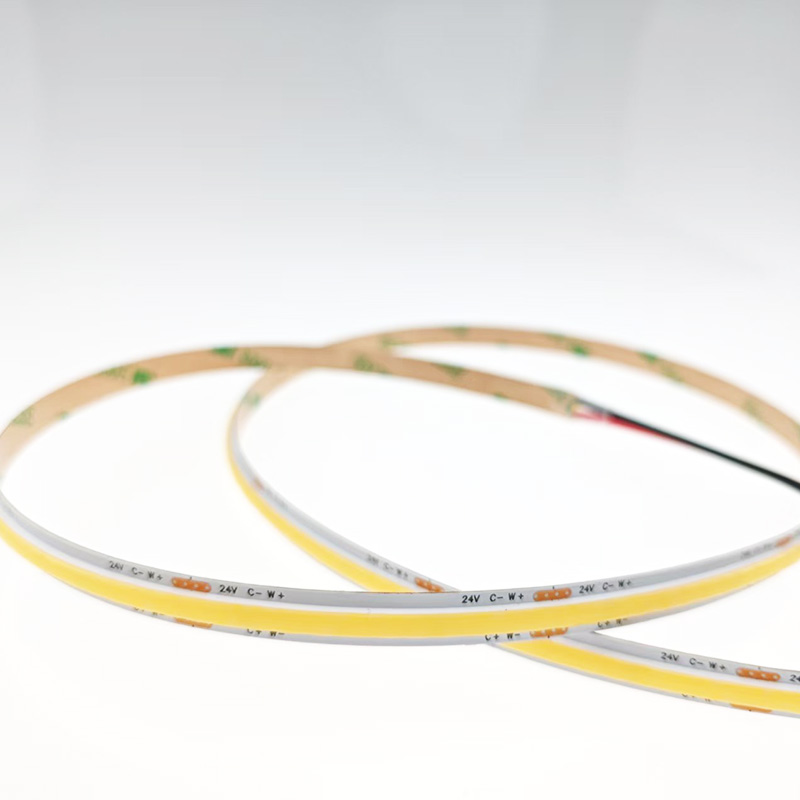
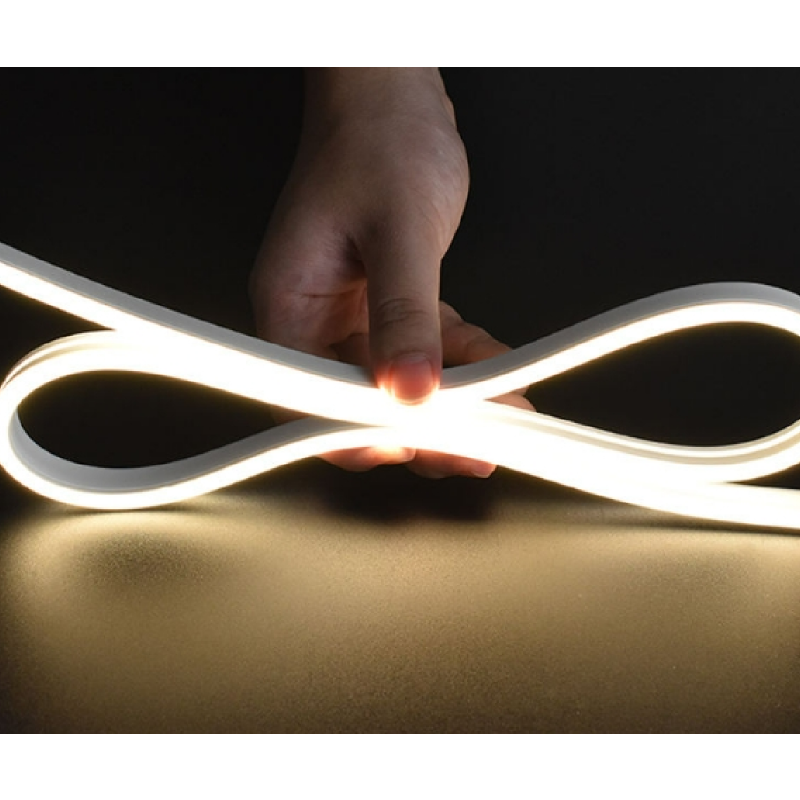
Stop comparing only price and CRI. Discover the hidden metrics of risk transfer, thermal psychology, and batch entropy that separate professional LED strip OEM sourcing from amateur procurement. If you are reading this, you have probably already compared twenty specification sheets. Everyone talks about lumens per watt, CRI 90, and 5-year warranties. But as a procurement veteran, you know those are table stakes. The real innovation in LED strip OEM sourcing isn’t happening in the chip; it’s happening in the supply chain architecture.
Here are four novel perspectives to evaluate your next lighting partner.
1. The "Risk Transfer" Coefficient (Not Just Price)
Most buyers focus on landed cost. Smart buyers focus on risk location. Does your supplier cap their liability at the invoice value, or do they cover field failure labor costs?
Ask your OEM partner about their batch entropy protocol. In PCB assembly, entropy (disorder) increases with every handling step. A supplier who statistically maps failure rates per 1,000 meters (not just per unit) gives you a predictable OpEx model for warranties. If they cannot provide historical variance data, you are not buying lighting; you are buying a lottery ticket.
2. Thermal Psychology: The "Touch Gap"
Here is a secret engineers ignore: End-users judge quality by temperature, not light.
Two strips can have the same solder joint temperature (85°C). But one uses a 2-oz copper core; the other uses a cheap aluminum backing. On paper, they pass. In reality? The cheap strip radiates heat unevenly, creating a "hot lip" on the silicone. Your customer touches that strip once. If it feels "burning scary" (even if technically safe), they will return the whole order. Audit your OEM’s thermal imaging reports for gradient stability. A good supplier optimizes for perceived safety, not just absolute Tcase max.
3. Modularity as Inventory Insurance
Demand volatility is killing lighting brands. You don’t need "fast shipping" – you need postponement.
A truly novel OEM partner offers component-level modularity. For example: One base PCB (24V, 10mm wide) that accepts three different lens attachments (180° flood, 120° accent, or 30° spot). Why does this matter for you? You can hold 10,000m of generic PCB stock locally, then laser-weld the specific optics 48 hours before a project ships. This reduces your SKU risk by 70%. If your supplier only sells finished rolls, your cash flow is trapped in finished goods. Demand shifts? You write off inventory. Ask for "Lego-block" design.
4. The "Ghost Specification"–Silicone Shore Hardness
Everyone checks IP ratings (IP20, IP65, IP67). No one checks the Shore A hardness of the silicone after six months. Standard silicone starts at Shore 70A. After 1,000 hours of UV exposure and thermal cycling, it creeps to 55A – it gets sticky, attracts dust, and yellows. Premium "anti-migration" silicone maintains 65A for 5,000 hours.
Why is this an OEM issue? When your strip gets sticky after 8 months, the end-user blames your brand, not the factory. Demand a hardness decay curve in your quality agreement. If the supplier doesn’t own a Shore durometer, walk away.
Final Thought: Buy a Timeline, Not a Spool
Every meter of LED tape contains a hidden timeline–of copper purity, of dispensing glue viscosity, of reflow oven temperature stamps.
The best OEM suppliers don’t sell lights. They sell process predictability. They will show you their SPC (Statistical Process Control) charts for glue viscosity across three shifts. They will archive a sample from every batch for 10 years.
Next time you source, don’t ask "What is your CRI?" Ask "What is your coefficient of variance for series resistance across 500 meters?" The answer to that question is the only specification that matters. Ready to audit your supply chain?
 Hot News
2026-07-24
2026-07-24
2026-07-24
2026-07-24
2026-07-24
2026-07-24
 EN
EN