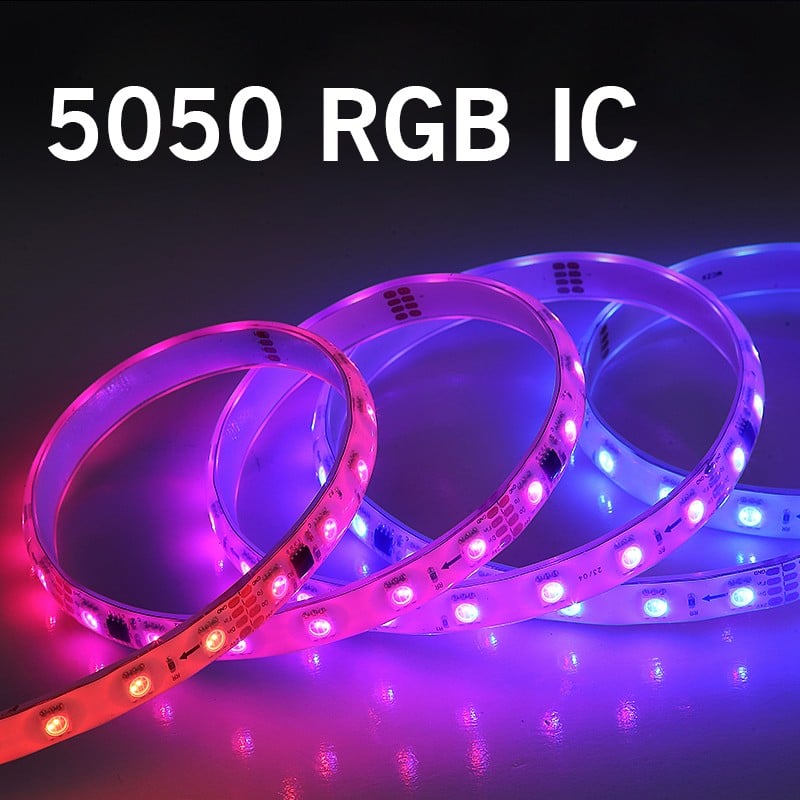
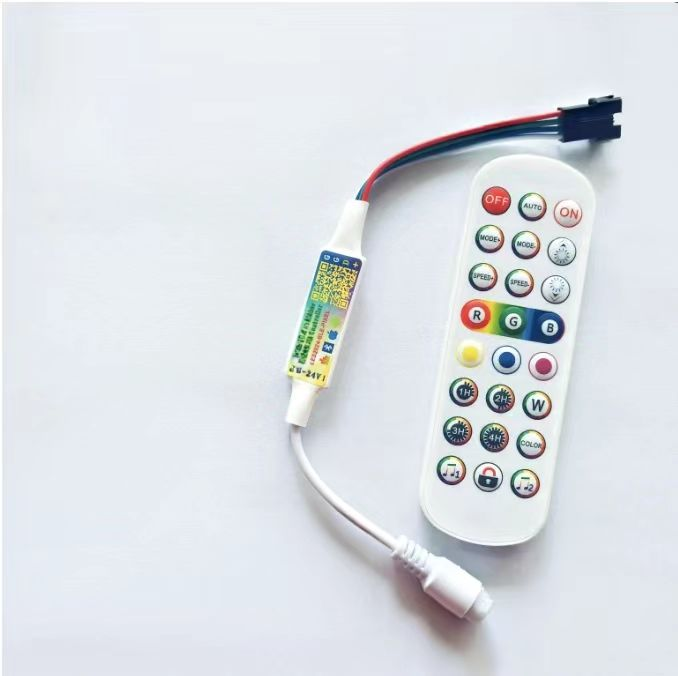
Most buyers choose LED strips by LED density. If you want an LED strip that lasts 50,000+ hours without fading or yellowing, stop counting chips. The 3 technical specs (thermal management, voltage drop, and CRI) that truly determine performance and lifespan. Start measuring these three overlooked factors.
1. The Voltage Drop Myth (Why Your Strip Is Pink at One End and White at the Other)
The most common complaint we hear isn’t about brightness—it’s about inconsistency. One end looks cool white, the middle looks warm, and the far end is visibly dimmer.What most sellers won’t tell you: Voltage drop happens faster than you think. On a standard 12V strip with 120 LEDs/m, noticeable color shift starts at just 5 meters. On 24V strips, you get about 10 meters.But here’s the new angle—copper thickness matters more than voltage. Most cheap strips use 1 oz copper. Quality strips use 2 oz or 3 oz copper. Doubling the copper reduces voltage drop by 50%, even at the same voltage.
Supplier tip: If your project runs longer than 8 meters, skip 12V entirely. Go 24V or 48V. And always ask for “double copper” in your spec sheet.
2. Thermal Management–The Silent Killer Nobody Sees
Here’s a test: run your LED strip at 100% brightness for 10 minutes. Touch the back of the adhesive tape. If it’s too hot to hold your finger on, you’ve lost 50% of its potential lifespan. Heat is the 1 reason LED strips fail—not the diodes themselves. What separates good strips from bad? The MCPCB (Metal Core Printed Circuit Board). Cheap strips use thin aluminum (0.2mm) with weak thermal conductivity (<1W/m·K). Professional strips use 0.4–0.6mm aluminum with 2–3W/m·K thermal conductivity.
Real-world impact: A strip running at 75°C will last 10,000 hours. At 55°C, it lasts 50,000 hours. That’s not a small difference—that’s the difference between replacing lights every 14 months versus every 6 years.
Actionable advice: Always request the thermal resistance specification (Rth). Below 10 K/W for a 1-meter section? Good. Above 15 K/W? Walk away.
CRI (Color Rendering Index) is the most deceived spec in LED lighting. Many sellers list “CRI 80” and ship strips that actually measure 72. But here’s the new perspective—CRI isn’t just for art galleries. It affects how materials react to your light.
· CRI 80: Wood looks flat. White fabrics look slightly blue. Skin tones look pale.
· CRI 90+: Wood grain pops. Whites are neutral. Skin looks natural.
· CRI 95+ (R9 50): Red colors actually look red. This matters for retail (meat displays, lipstick, flowers).
For residential under-cabinet lighting or hotel cove lights, never accept below CRI 90. The cost difference is less than $0.50 per meter at factory pricing
A Bonus Metric: COB vs SMD – Don’t Believe the Hype
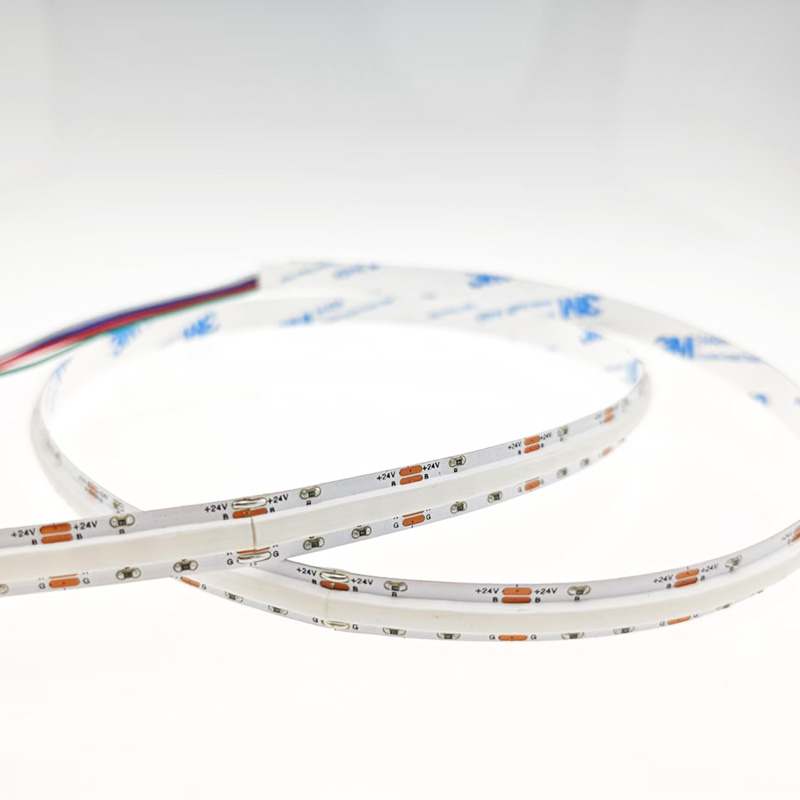
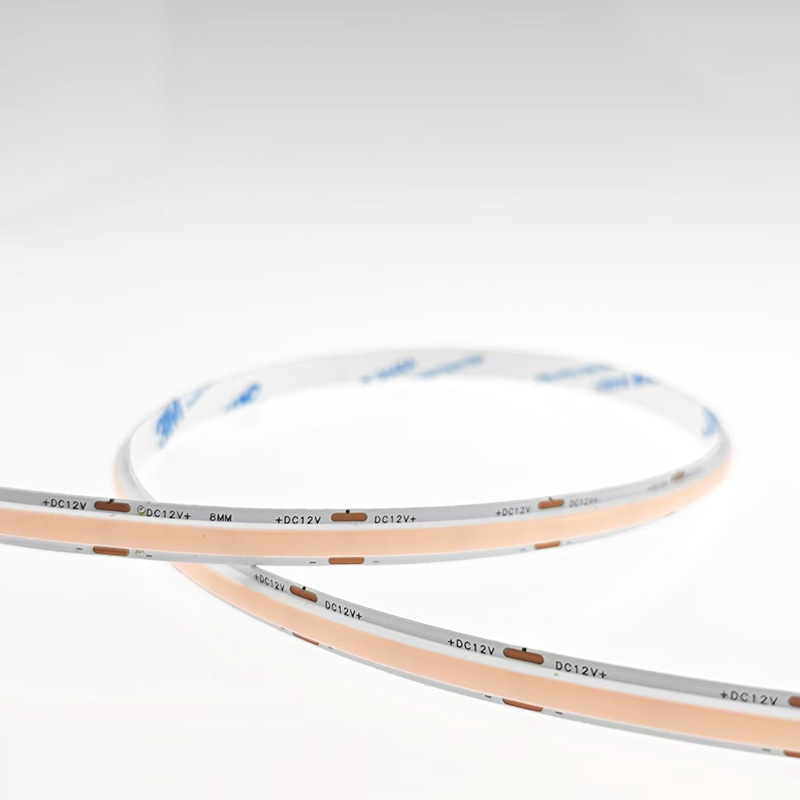
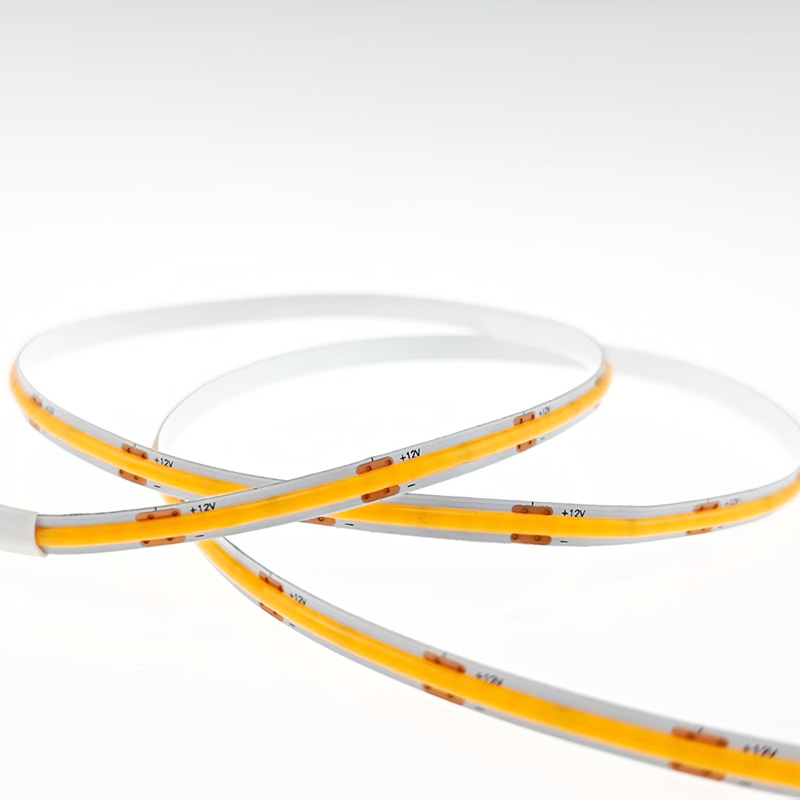
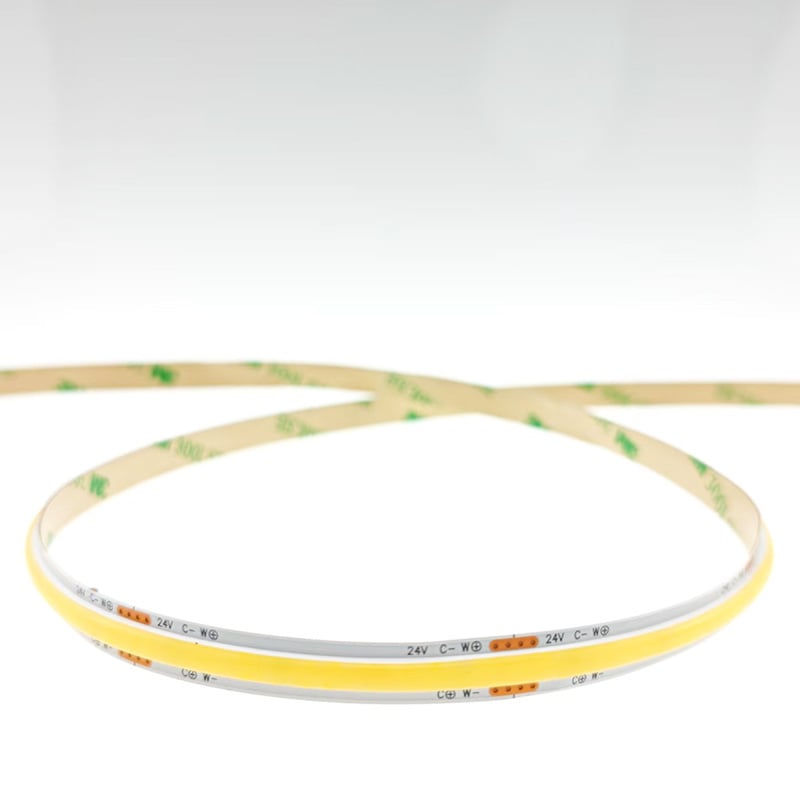
You’ve seen “COB” strips (Chip-on-Board) marketed as premium. They are better for eliminating dotting—the continuous light line is real. But COB strips run significantly hotter than SMD strips at the same brightness. Why? Diodes are packed so tightly that heat can’t escape.
Our internal testing: A 14W/m COB strip runs 12–15°C hotter than a 14W/m SMD 2835 strip. That heat accelerates adhesive failure and phosphor degradation. So which to choose?
· COB: Visible installations (glass shelves, clear covers) where you need a seamless line.
· SMD 2835: Inside aluminum channels, behind crown molding, or anywhere heat is a concern.
Final Checklist for Buyers (Save This)
Before you order your next LED strip, ask your supplier for three numbers:
1. Copper thickness (≥2 oz for runs 5m)
2. Thermal resistance Rth (≤10 K/W per meter)
3. CRI with R9 value (CRI ≥90, R9 ≥50 for accurate reds)
If they can’t provide these, they’re likely reselling commodity strips with no quality control.
Remember: LED strips are a system, not just a light source. The driver (power supply), the channel (heatsink), and the installation method all matter. A $5 strip installed poorly will perform worse than a $15 strip installed correctly.
 Hot News
2026-07-24
2026-07-24
2026-07-24
2026-07-24
2026-07-24
2026-07-24
 EN
EN