If you’ve shopped for LED strip lights recently, you’ve likely come across two acronyms: SMD and COB. Both are popular, both are energy‑efficient, but they serve very different purposes. Choosing the wrong type can leave you with visible hot spots, poor colour blending, or unnecessary costs.
So, what’s the real difference—and which one should you choose? Let’s break it down.
What Are SMD LED Strips?
SMD stands for Surface‑Mounted Device. These are the classic LED strips with small individual chips (typically 2835, 3528, or 5050 sizes) mounted on a flexible PCB. Each chip emits light from a single point, and they are spaced evenly along the strip.
Key characteristics:
· Visible individual light points (dots)
· Wide range of colours (RGB, RGBW, single‑colour)
· Lower cost per metre
· Good for general accent and task lighting
Best for: Under‑cabinet lighting where the strip is hidden, shelf lighting, or decorative applications where the dot pattern isn’t a concern.
What Are COB LED Strips?
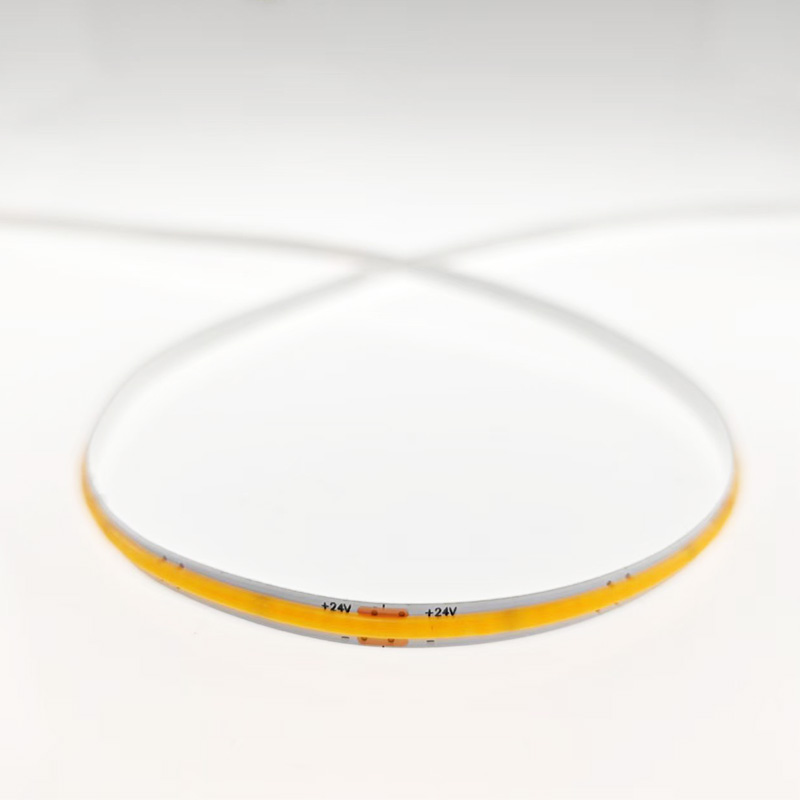
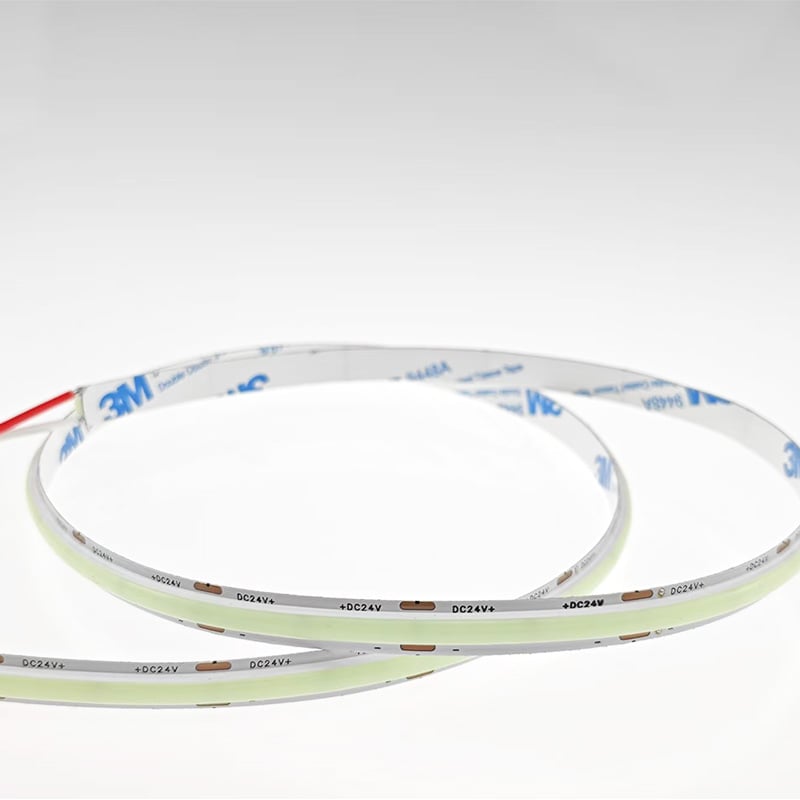
COB stands for Chip‑on‑Board. Here, multiple LED chips are densely packed and bonded directly onto the PCB, then covered with a uniform phosphor layer. The result is a continuous, seamless line of light—no gaps, no dots.
Key characteristics:
· Dot‑free, continuous light line
· Higher light uniformity and softer glow
· Better colour mixing (ideal for tunable white)
· Typically higher CRI (90+)
· Slightly more expensive
Best for: Applications where the strip is visible—cove lighting, backlit mirrors, display cases, and any design‑conscious installation.
When to Choose SMD
· You’re on a tight budget – SMD strips are significantly cheaper, making them ideal for large projects or temporary installations.
· The strip will be hidden – If you’re tucking it under cabinets, behind furniture, or inside aluminium channels with a diffuser cover, the dots won’t be visible.
· You need RGB or dynamic colour effects – SMD strips offer a much wider palette of saturated colours.
· You need very high brightness – Some high‑power SMD chips (e.g., 5050) can output more lumens per watt than equivalent COB.
When to Choose COB
· The strip is exposed – Cove ceilings, backlit mirrors, open shelving—anywhere the light source is visible demands a dot‑free finish.
· Colour quality matters – For photography, retail display, or makeup areas, COB’s CRI 90+ ensures natural, true‑to‑life colours.
· You want glare‑free illumination – The continuous phosphor layer diffuses light evenly, reducing harshness on the eyes.
· You need tight bends – COB strips are more flexible and can curve around tight radii without breaking.
· You’re using tunable white – The colour mixing on COB is far smoother, with no separation between warm and cool zones.
Real-World Applications
SMD examples:
· Party lighting with RGB effects
· Garage or workshop task lighting (hidden in fixtures)
· Temporary event décor
· Outdoor accent lighting (with waterproof coating)
COB examples:
· Luxury hotel cove lighting
· Kitchen under‑cabinet (visible edge)
· Museum display cases
· Bedroom headboard backlight
· Retail jewellery showcases
The Cost Factor
COB strips typically cost 30–50% more than SMD strips of similar length and brightness. However, the price gap has narrowed significantly, and many professionals now consider COB the standard for quality interior lighting.
If budget is tight, you can compromise by using SMD with a frosted diffuser channel—this reduces dots but also cuts brightness and adds installation cost. In many cases, investing directly in COB is more cost‑effective in the long run.
Final Verdict
There’s no universal “better” option—it depends entirely on your project.
· Choose SMD for budget‑friendly, colourful, or hidden applications.
· Choose COB for premium, exposed, high‑CRI, or dot‑free designs.
Still unsure? Consider ordering a sample of both types and testing them in your actual space. Nothing beats seeing the difference with your own eyes.
We offer both SMD and COB strips in a range of colour temperatures, densities, and waterproof ratings. Browse our collection or contact our team for personalised advice—we’ll help you select the perfect strip for your needs.
 Hot News
2026-07-24
2026-07-24
2026-07-24
2026-07-24
2026-07-24
2026-07-24
 EN
EN