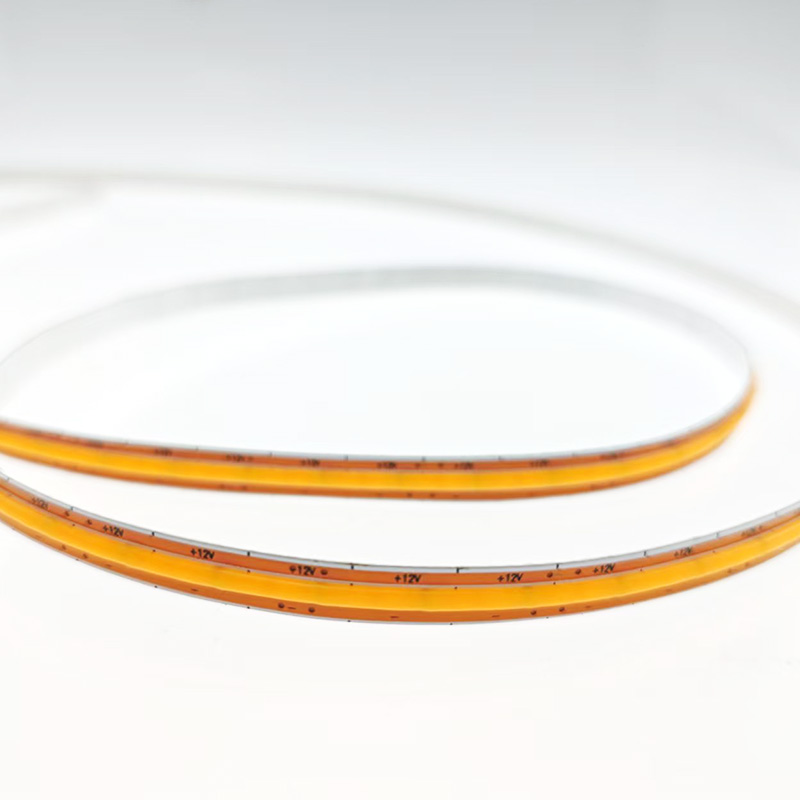
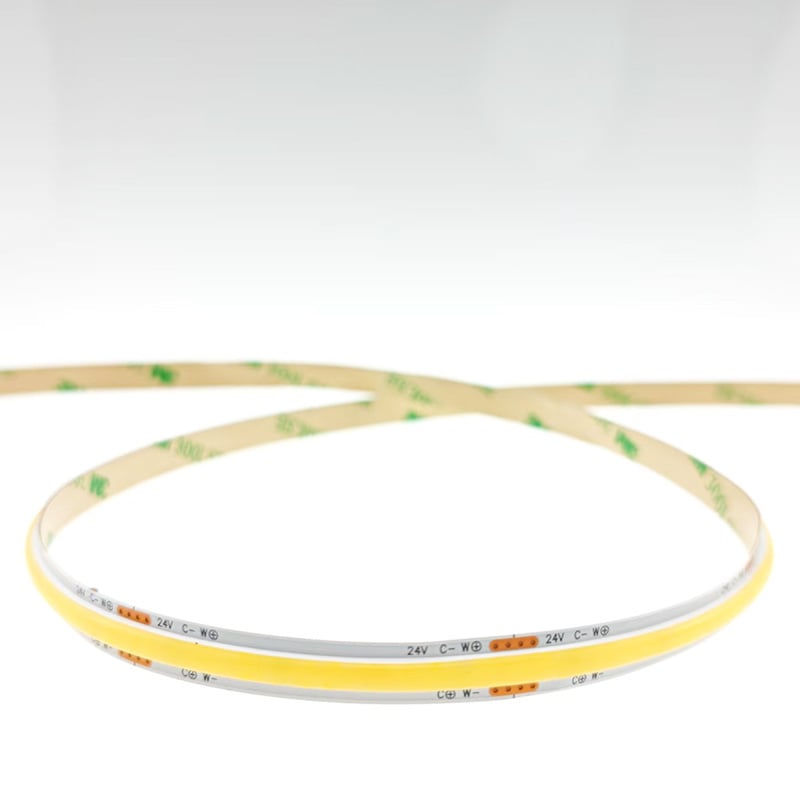
You’ve picked the perfect LED strip—right colour temperature, high CRI, ideal density. You install it carefully, plug it in, and… it flickers, dims at the far end, or worse, the power supply burns out within a week. The culprit? An incorrectly chosen power supply. Choosing the right driver is just as important as choosing the strip itself. Here’s everything you need to know to get it right—safely and cost‑effectively.
Step 1: Choose the Correct Voltage
LED strips typically operate on 12V DC or 24V DC. Your power supply must match the strip’s rated voltage. There is no exception—plugging a 24V supply into a 12V strip will instantly destroy the LEDs.
Which voltage should you choose?
· 12V is common for shorter runs (under 5 metres / 16 ft) and smaller projects.
· 24V is strongly recommended for longer installations (over 5 metres) because it suffers less voltage drop, meaning the strip stays uniformly bright from end to end.
If you’re still planning your purchase, opt for 24V strips—they offer better performance, wider compatibility with commercial drivers, and allow longer continuous runs.
Step 2: Calculate the Required Wattage
This is the most common point of error. Many buyers simply match voltage and assume any power supply of that voltage will work. In reality, you must calculate total power consumption.
Formula:
Total wattage needed = (Watts per metre of your strip) × (Total length in metres)
For example:
· Your strip draws 10W per metre.
· You plan to install 8 metres.
· Total = 10 × 8 = 80W
Step 3: Add a Safety Margin (Very Important)
Never run a power supply at 100% of its rated capacity. Doing so generates excessive heat, shortens the driver’s lifespan, and increases the risk of failure.
Rule of thumb: Add at least 20% headroom.
Using the example above:
· 80W × 1.2 = 96W
· So you should purchase a power supply rated at 100W or higher (e.g., a 120W model).
For outdoor or high‑ambient‑temperature environments, consider 30–40% margin to compensate for heat derating.
Step 4: Understand Power Supply Types
Not all power supplies are created equal. Choose based on your installation environment and project scale.
Type Description Best for
Plug‑in adapter (wall wart) Compact, pre‑wired with DC jack Small home projects, single strips under 5m
Metal‑cased switching power supply (LED driver) Higher wattage, screw terminals, fan‑cooled options Large residential or commercial installations
Waterproof / IP67 power supply Encased in weatherproof housing Outdoor signage, garden lighting, wet areas
Dimmable driver Supports PWM or 0‑10V dimming Smart home setups requiring brightness control
Pro tip: For permanent installations inside walls or ceilings, use only Class 2 or SELV (Safety Extra Low Voltage) certified drivers—they offer built‑in short‑circuit and overload protection.
Step 5: Check the Driver’s Current Rating
LED strips are constant‑voltage devices—they require a stable DC voltage, and the driver’s current (amperage) will automatically adjust as long as the wattage is sufficient. However, you can also calculate current:
Amps = Total Wattage ÷ Voltage
For an 80W load at 24V:
· 80 ÷ 24 = 3.33 amps
Ensure your power supply can deliver at least that current continuously (with the 20% margin, it should be rated for 4 amps or more).
Step 6: Beware of “Voltage Drop” and Distance
If your power supply is placed far from the strip, the resistance in the connecting wires can cause voltage drop—the strip will appear dimmer at the far end.
To mitigate:
· Keep the driver as close to the strip as possible (wire length under 3 metres is ideal).
· Use thicker gauge wires (e.g., 18 AWG or lower) for longer distances.
· For runs over 10 metres, feed power from both ends or use multiple drivers.
Step 7: Never Overload a Single Driver
If you have a very long installation (e.g., 20 metres of strip), do not connect it all to one large power supply and run a single feed line. Instead:
· Split the strip into sections and use separate drivers for each zone, or
· Use a central driver with multiple output terminals and run separate wires to each section.
This reduces voltage drop and ensures consistent brightness.
Quick Selection Checklist
Before buying a power supply, confirm:
· Voltage matches your strip (12V or 24V)
· Wattage rating ≥ (strip W/m × total metres) × 1.2
· Driver has necessary certifications (CE, UL, or equivalent)
· Suitable for your environment (indoor/outdoor, temperature range)
· Compatible with your dimming system (if used)
Final Thoughts
A quality power supply is the unsung hero of any LED installation. Invest in a reputable brand with proper safety certifications—it’s a small extra cost that protects your entire lighting system and gives you peace of mind.
Still unsure about which driver to choose? We offer bundled kits with pre‑matched strips and power supplies, and our support team can calculate the exact specifications for your project. Get in touch—we’re here to help you shine.
 Hot News
2026-07-24
2026-07-24
2026-07-24
2026-07-24
2026-07-24
2026-07-24
 EN
EN