You’ve nailed your lighting design, calculated the wattage, and picked the perfect colour temperature. But if you source your LED strips from an unreliable supplier, all that planning can unravel—inconsistent colour, premature failures, or compliance issues that delay your project.
For contractors, wholesalers, and large‑scale installers, choosing the right manufacturing partner is as important as choosing the product itself. Here are 8 critical factors to evaluate before placing that bulk order.
1. Certifications and Compliance
Never assume a supplier’s products are safe or legal for your market. Ask for certificates of compliance upfront.
· CE / UKCA – Mandatory for Europe and UK markets.
· UL / ETL – Required for North American installations (fire safety).
· RoHS / REACH – Restriction of hazardous substances—essential for environmentally conscious buyers.
· ERP / Energy Star – Energy efficiency ratings that may affect your project’s green credentials.
Red flag: A supplier who hesitates or provides expired certificates. Always verify certificates against the issuing body’s database.
2. Transparency on Materials and Bill of Materials (BOM)
A premium strip is defined by what’s inside—not just the LEDs. Ask for a detailed BOM that lists:
· LED chip brand – Epistar, Sanan, Osram, or Lumileds? Branded chips offer better consistency and lifespan.
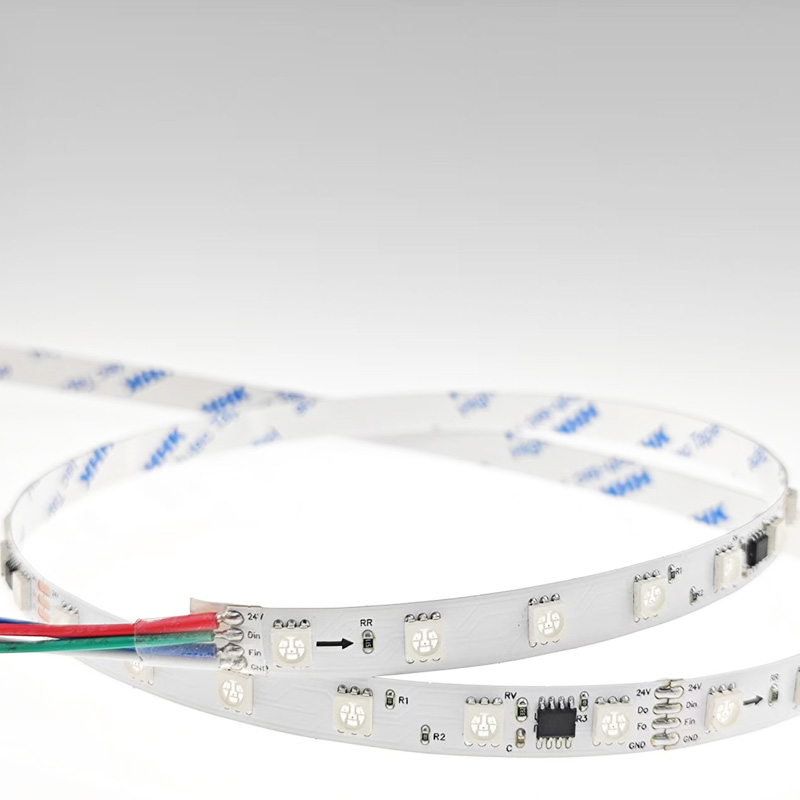
· PCB material – Copper thickness (2 oz is better than 1 oz) and substrate quality (flexible vs. rigid).
· Wire gauge – Thicker wires reduce voltage drop.
· Phosphor and adhesive quality – High‑grade silicones resist yellowing and peeling over time.
A trustworthy supplier will share this information willingly. If they won’t, move on.
3. Stringent Quality Control (QC) Processes
How does the supplier ensure every metre of strip works perfectly before shipping? Look for:
· 100% ageing test – Every strip burned for 24‑48 hours at full power to weed out early failures.
· Optical inspections – Check for colour consistency (MacAdam 3‑step or better) and luminance uniformity.
· Soldering and connection tests – Random pull tests on connectors and solder joints.
Ask for their QC report with each batch. A professional supplier will have a documented quality management system (ISO 9001 is a plus).
4. Customisation Capabilities
Your project may require specific lengths, colour temperatures, IP ratings, or even custom packaging. Does the supplier offer:
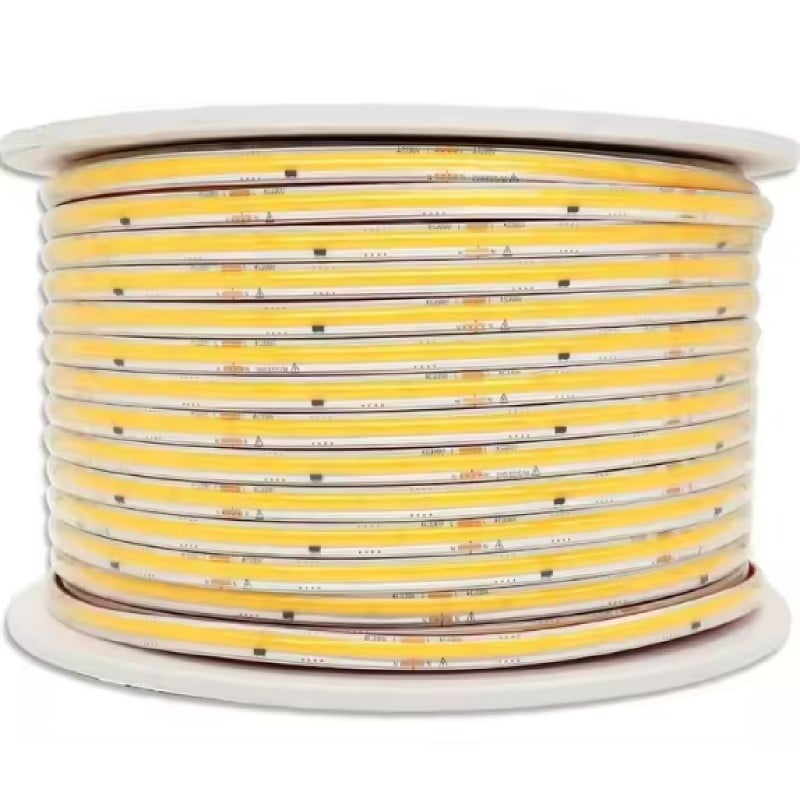
· Custom cut lengths (not just standard 5m reels)?
· Custom colour temperature (e.g., 2800K, 4500K)?
· Branded or custom packaging for your resale?
· OEM / ODM services for unique designs?
Even if you don’t need customisation now, a supplier with flexible capabilities signals a mature manufacturing operation.
5. Realistic MOQ and Pricing Structure
Minimum Order Quantity (MOQ) can make or break a deal.
· Low‑MOQ suppliers (e.g., 100‑500m) are ideal for small contractors or test orders.
· High‑MOQ suppliers (e.g., 5000m+) suit large distributors.
Watch for hidden costs:
· Tooling fees for custom lengths
· Packaging charges
· Shipping insurance
· Payment terms (e.g., 30% deposit, balance before shipment)
Request a full proforma invoice with all line items to compare apples to apples.
6. Lead Times and Logistics Reliability
A great product is useless if it arrives late. Evaluate:
· Standard lead time – Is it 15, 30, or 45 days?
· Seasonal variations – Chinese New Year, summer holidays, etc.
· Shipping options – Air freight vs. sea freight; DDP vs. FOB.
· Tracking and communication – Does the supplier provide regular production updates?
A reliable supplier will propose realistic timelines and communicate delays proactively.
7. After‑Sales Support and Warranty
Even with the best QC, occasional issues arise. A trustworthy partner stands behind their product:
· Warranty period – 2 years, 3 years, or 5 years? Longer is better, but check coverage terms.
· Replacement policy – Do they replace defective batches free of charge, or do you pay for return shipping?
· Technical support – Do they offer assistance with driver matching, dimming compatibility, or installation troubleshooting?
Test their responsiveness by sending a technical query before you order—their reply speed and depth tell you a lot.
8. Sample Policy and Trial Orders
Never commit to a large order without testing. Evaluate:
· Sample cost – Is it free (with freight) or chargeable?
· Lead time for samples – Usually 3‑5 days vs. mass production.
· Custom sample availability – Can they produce a sample matching your exact spec?
Order samples from at least three suppliers and compare them side‑by‑side in your real environment. Test for:
· Colour consistency across multiple reels
· Brightness uniformity
· Adhesive peel strength
· Real‑world performance at full length
Only after passing your tests should you proceed to a pilot run (e.g., 10‑20% of your total quantity).
Quick Supplier Checklist
Factor What to Look For
Certifications CE, UL, RoHS, ERP – all current and valid
Material transparency Branded chips, copper weight, detailed BOM
QC process Ageing test, optical inspection, ISO 9001
Customisation Cut lengths, packaging, OEM options
MOQ Realistic for your volume, no hidden fees
Lead time 15‑30 days max, clear shipping terms
Warranty 3+ years, fair replacement policy
Samples Quick delivery, reasonable cost
Final Word
Choosing a supplier isn’t just about price—it’s about risk management. A cheap strip that fails halfway through a hotel renovation costs you far more in rework, reputation, and delays than paying a fair price to a reliable partner.
Take the time to vet thoroughly. And when you find a supplier who ticks all eight boxes, invest in that relationship—it will pay dividends for every future project.
We invite you to put us to the test. Request your free sample kit today and see the difference that premium materials, rigorous QC, and transparent communication make. Our team is ready to support your next bulk order—contact us for a custom quote.
 Hot News
2026-07-24
2026-07-24
2026-07-24
2026-07-24
2026-07-24
2026-07-24
 EN
EN