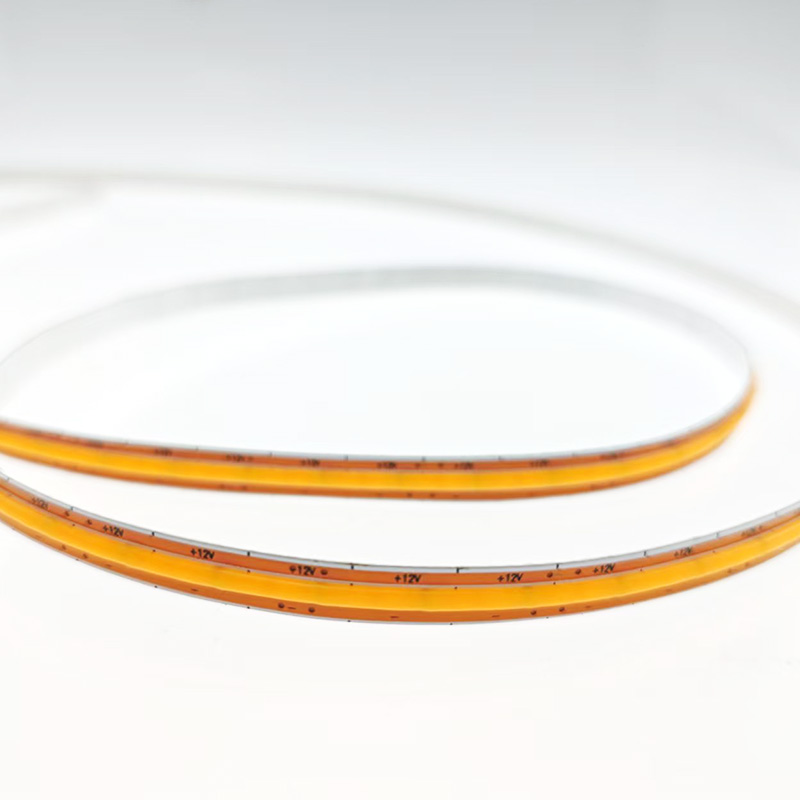
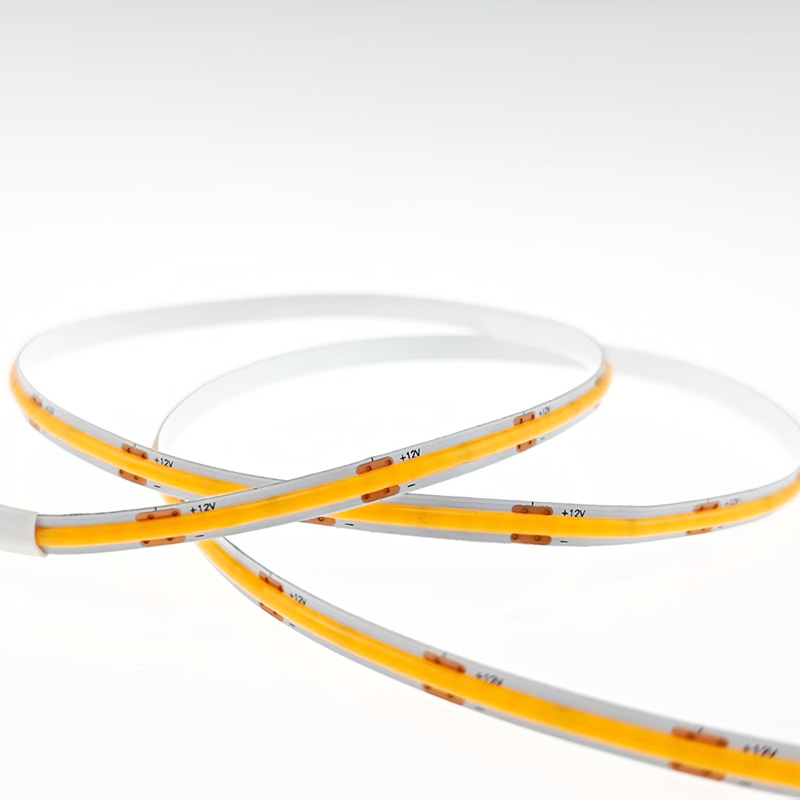
As a professional LED strip supplier, I’ve seen thousands of projects — from cozy home coves to flashy retail displays. But the most exciting innovations happen when engineers, not just designers, get their hands on flexible strip lights. Here are five unconventional engineering applications.
Most engineers monitor strain or cracks using expensive sensors. But what if LED strips could provide instant visual feedback? By embedding weatherproof LED strips along bridge girders, tunnel linings, or dam surfaces — and pairing them with strain gauges — you can create a real-time warning system. When stress exceeds a threshold, the strip changes from green to red. This is not just aesthetic; it allows maintenance crews to spot anomalies from a distance. For seismic zones, dynamic RGB strips can simulate deflection paths during live tests.
Vertical farming is engineering at its core. Here, LED strips replace sunlight — but the innovation lies in spectral programmability. Engineers can tune strips to emit specific blue (450nm) and red (660nm) wavelengths to accelerate photosynthesis while minimizing heat. Newer designs include far-red and UV-A supplement strips that trigger plant defense responses, increasing flavonoid content. Cost-effective, low-profile strips fit into multi-layer hydroponic racks.
Machine vision systems rely on controlled, uniform lighting — and traditional ring lights often create shadows. Flexible LED strips can be wrapped around camera lenses, conveyor belts, or robotic arms to provide shadow-free, dimmable illumination. Better yet, strobe-capable strips synchronized with high-speed cameras freeze motion for defect detection. Ultra-slim, magnetic-backed strips are easy to retrofit into existing production lines.
Saltwater, pressure, and biofouling destroy ordinary lights. But specially potted LED strips (IP68 with corrosion-resistant coatings) are now used in ROVs, subsea pipelines, and aquaculture cages. Engineers use them for nondestructive testing (NDT) — e.g., illuminating weld seams inside confined ballast tanks. Another emerging use: dynamic lighting on offshore wind turbine platforms to signal turbine status (green = safe to board, red = maintenance). Marine-grade strips with polyurethane encapsulation last 10x longer than silicone.
Standard emergency exit signs are static. But LED strips can become dynamic egress paths. Integrated with fire alarms and smoke detectors, addressable strips (each segment individually controlled) can illuminate a green walking path along tunnel walls, changing to flashing red arrows pointing away from a fire source. This “chase” effect has been proven to reduce evacuation uncertainty in underground mines and rail tunnels.
 Hot News
2026-07-24
2026-07-24
2026-07-24
2026-07-24
2026-07-24
2026-07-24
 EN
EN