You’ve selected the perfect LED strip—high CRI, ideal colour temperature, and the right wattage. You stick it onto a surface, plug it in, and… it looks cheap. The dots are visible, the light is harsh, and you worry about heat building up.
The missing piece? An aluminium profile. Often treated as an optional accessory, a quality channel is actually essential for performance, longevity, and appearance. Here’s everything you need to know—and how to choose the right profile for your project.
Why Use an Aluminium Profile?
1. Superior Heat Dissipation
LEDs generate heat. Without a heatsink, that heat gets trapped, accelerating lumen depreciation and colour shift. An aluminium channel acts as a passive heatsink, drawing heat away from the strip and extending its lifespan significantly—often from 30,000 to 50,000+ hours.
2. Glare Reduction and Light Diffusion
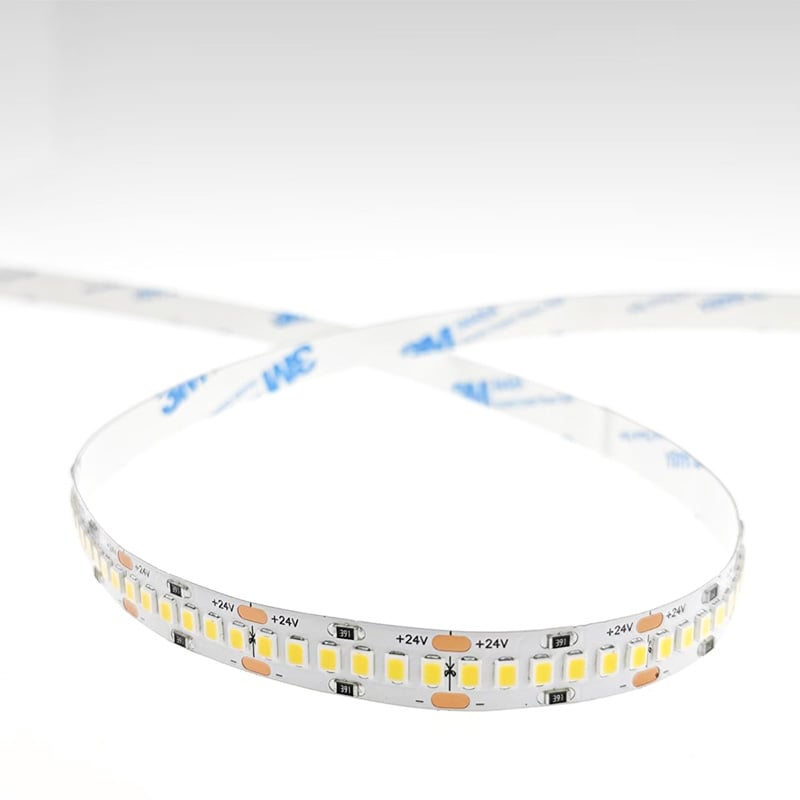
Bare SMD strips produce visible hotspots and dot patterns. A profile with a diffuser cover softens the light, creating a smooth, continuous line—essential for exposed installations like cove ceilings or under‑cabinet lighting.
3. Physical Protection
The channel shields the strip from dust, accidental knocks, and moisture (when paired with an IP‑rated strip). It also prevents the adhesive tape from peeling over time.
4. Clean, Professional Finish
A recessed or surface‑mounted profile gives your installation a built‑in, custom look—elevating it from “DIY” to “designer.”
Types of Aluminium Profiles
Choose based on your mounting surface and desired effect.
Type Description Best For
Surface‑mounted (flat) Rectangular channel that sits on top of the surface Under cabinets, shelves, wardrobes—visible but tidy
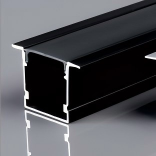
Recessed / flush‑mount Sits flush with the surface (requires routing a groove) Drywall ceilings, plaster walls, built‑in furniture
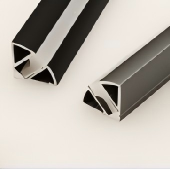
Corner / angled 45° or 90° angle for edge lighting Stair nosings, wall‑ceiling junctions, display cases
Suspension / pendant Hangs from cables Commercial signage, reception desks, high ceilings
Flexible Bendable profiles for curved surfaces Circular designs, curved walls (rare but available)
Understanding Diffuser Covers
The diffuser cover determines the light quality and beam angle. Most profiles come with interchangeable covers—choose wisely.
· Clear / Transparent: Maximum brightness, but dots may still be visible. Best for SMD strips hidden from direct view.
· Frosted / Opal: Softens light, reduces hotspots, and creates a uniform glow. The most popular choice for residential interiors.
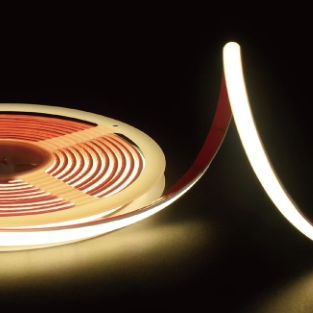
· Milky / Heavy Frost: Maximum diffusion—almost completely hides the LEDs. Reduces brightness by 20–30% but delivers the smoothest effect. Ideal for COB strips or when the strip is very close to the eye.
Pro tip: For COB strips, a frosted cover is usually sufficient; for SMD, a milky cover gives a better dot‑free result.
Profile Size and Depth
Profiles come in various widths and depths. Consider these factors:
· Width must accommodate your strip’s PCB width (typically 8mm, 10mm, or 12mm). Choose a channel at least 2‑3mm wider than your strip for easy installation.
· Depth affects heat dissipation and visibility. Deeper profiles (12‑15mm) offer better cooling and allow higher‑power strips. Shallow profiles (6‑8mm) are discreet but limited to low‑wattage strips.
· Length – standard profiles come in 1m, 2m, or 3m lengths, but can be cut on‑site. For long runs, use connectors to join sections seamlessly.
Matching Profile to Strip Power
Heat dissipation is directly related to strip wattage. As a rule of thumb:
· Low power (< 5W/m): Shallow 8mm profile is fine.
· Medium power (5‑10W/m): Standard 10‑12mm profile with reasonable depth.
· High power (10‑20W/m): Deep profile (15mm+) with wide base and finned design for maximum surface area.
If you’re using COB strips at high density or running them at full brightness, invest in a profile with a thicker aluminium wall (≥1.5mm) and a larger surface area.
Installation Tips for Aluminium Channels
1. Cutting to Length
Most profiles can be cut with a hacksaw or mitre saw. Deburr the cut edge with a file to avoid damaging the strip or diffuser.
2. Mounting
· Surface‑mounted: Use screws or strong double‑sided tape (VHB). Screws are more secure for heavier profiles.
· Recessed: Rout a groove exactly matching the profile’s width and depth. Use adhesive or clips to hold it in place.
3. Installing the Strip
Peel the adhesive backing and press the strip into the channel—ensure it sits flat. For longer runs, test the strip before attaching the diffuser.
4. Diffuser Installation
Slide the diffuser cover into the grooves. For tight fits, gently press along the length—avoid forcing, which can crack the cover.
5. End Caps and Connectors
Use end caps to seal the profile ends (especially important for IP65 installations). For joining two profiles, use connector clips that align both channels perfectly.
Cost vs. Value
Aluminium profiles add 20‑50% to your total material cost. However, they protect a far more expensive strip and dramatically improve the final result. For any permanent installation, a profile is not an “optional extra”—it’s a necessity.
For temporary or hidden applications (e.g., behind a sofa), you might skip it. But for kitchens, bathrooms, living rooms, and commercial spaces, invest the extra few dollars—your clients (and your reputation) will thank you.
Quick Selection Checklist
Before ordering a profile, confirm:
· Width matches your strip (with 2‑3mm clearance)
· Depth suitable for your strip’s wattage
· Diffuser type matches desired light effect (frosted vs. milky)
· Mounting type fits your surface (surface vs. recessed)
· Length covers your entire run (or use connectors)
· End caps included (or ordered separately)
Final Thoughts
A high‑quality LED strip deserves a high‑quality home. Aluminium profiles are the unsung heroes of professional lighting—they keep your LEDs cool, your light beautiful, and your installation safe.
Whether you're a DIY enthusiast or a commercial contractor, never underestimate the difference a proper channel makes. Pair your strip with the right profile, and you’ll achieve results that look built‑in, not tacked‑on.
Explore our full range of aluminium profiles—surface‑mount, recessed, corner, and flexible options—complete with matching diffusers, end caps, and mounting clips. Free design consultation available for bulk orders.
 Hot News
2026-07-24
2026-07-24
2026-07-24
2026-07-24
2026-07-24
2026-07-24
 EN
EN